
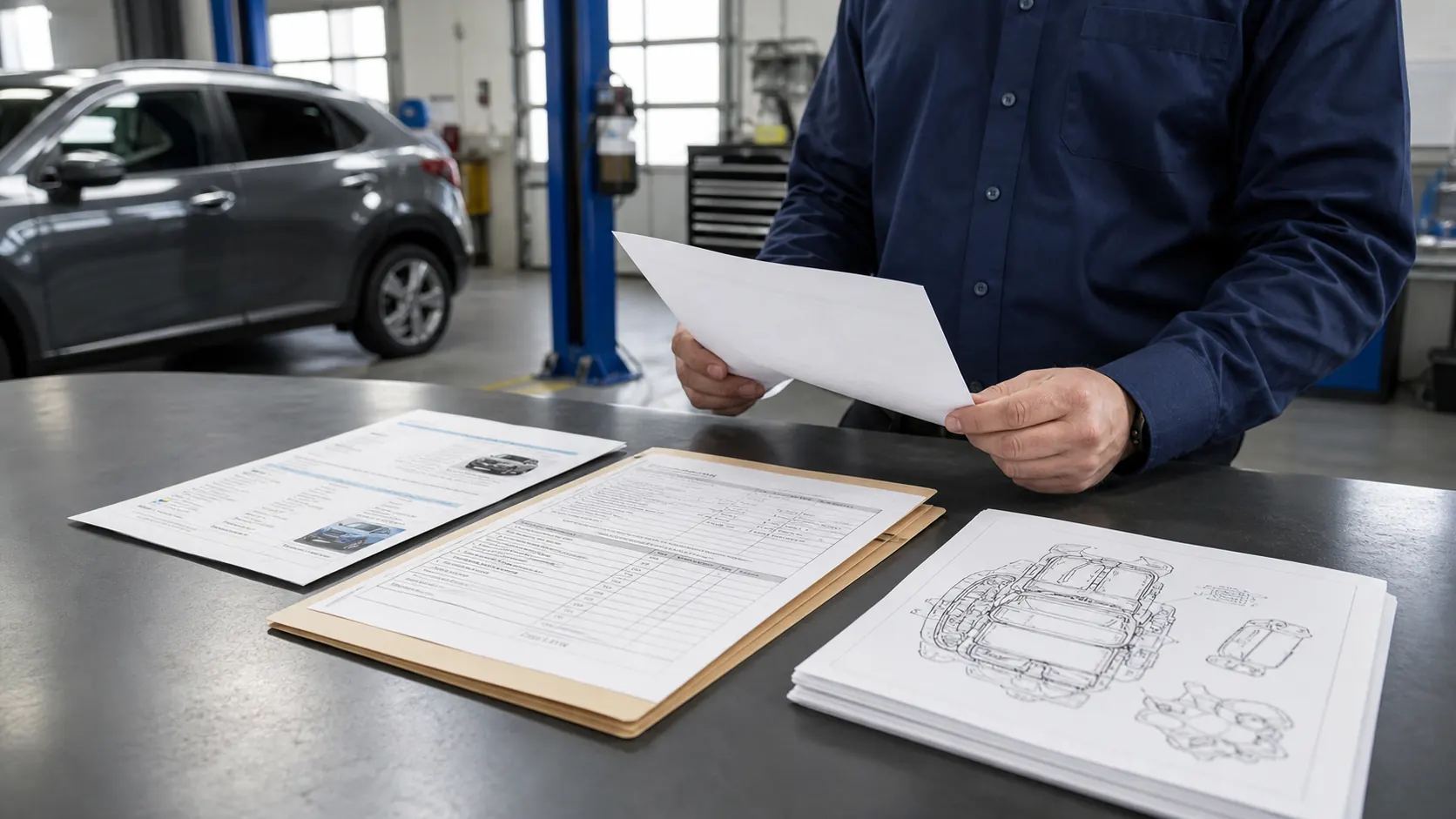
NHTSA says frontal driver air bag inflators marked DTN60DB are defective and illegal to import or sell in the United States. The agency says the known ruptures involved replacement air bag equipment installed after prior crashes, and a VIN search cannot identify this equipment.
That changes the first question for a replacement request. Do not begin with a vehicle description alone. Start with the crash and repair record, then establish who supplied and installed the existing air bag module.

Aftermarket airbag replacement verification starts with vehicle history
NHTSA advises owners and buyers to review a vehicle history report for a prior air bag deployment, crash, total-loss event or theft history. Those records do not identify an inflator by themselves. They tell the buyer when an air bag replacement deserves a closer look.
The agency says the issue is not tied to a normal VIN recall result. That is an important distinction for a used-vehicle buyer, a repair business and a parts distributor. A clear recall search is useful, but it does not prove that a replacement air bag module is genuine or suitable.
Keep safety parts outside a routine RFQ
An air bag request should not be processed like a lamp, filter or exterior trim item. Where there is a prior deployment or uncertain repair history, the correct next step is a qualified inspection. NHTSA says vehicle owners should not inspect or dismantle the steering wheel themselves.
- Vehicle identification and available repair history
- Whether a prior crash involved air bag deployment
- Who performed the replacement and when, if documented
- Any invoice, repair order or module source record
- A qualified technician or dealer inspection path
Keep the record split visible. A vehicle history report, a parts invoice and a technician inspection each answer a different question. One should not be used as a substitute for the others.
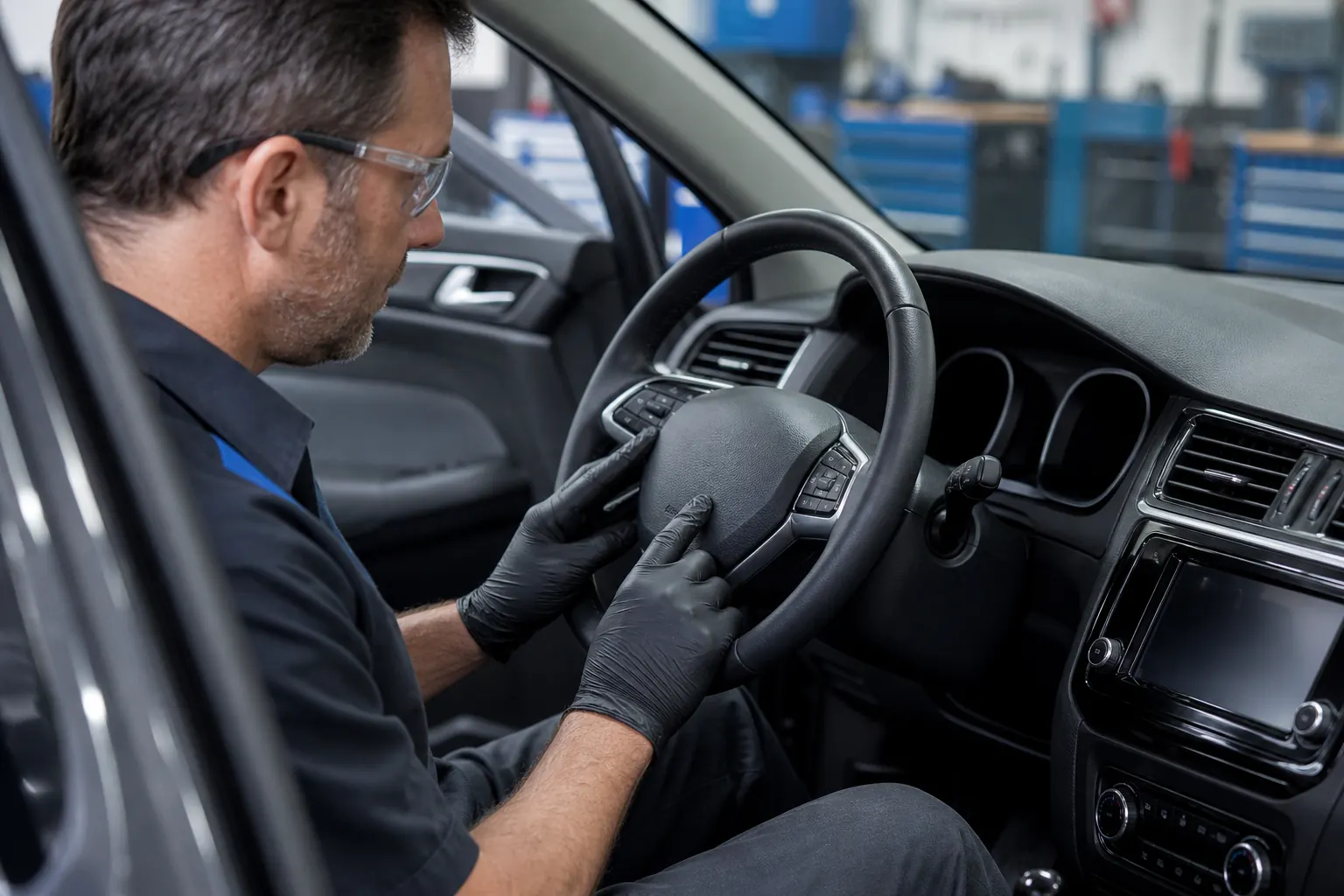
What the DTN60DB notice does and does not establish
NHTSA identifies DTN60DB as the marking on the affected frontal driver air bag inflators. It says known ruptures have occurred in Chevrolet Malibu and Hyundai Sonata vehicles, but the agency does not say the risk is limited to those vehicles. The agency also notes that the affected equipment is not linked to a vehicle VIN.
Do not turn that notice into a fitment list. It is a safety and traceability issue. It does not establish a replacement part number, a blanket vehicle application or a substitute module for a quotation.
Sourcing notes
For a vehicle with an uncertain air bag repair history, use genuine replacement equipment and follow the vehicle manufacturer or qualified repair professional's process. If an inflator marked DTN60DB is found, NHTSA says the vehicle should not be driven until it is replaced with genuine original-equipment parts.
NodeMotive takeaway
For an air bag-related RFQ, capture the repair history before the part request. If the history is unclear, stop at verification and route the vehicle to a qualified inspection.