
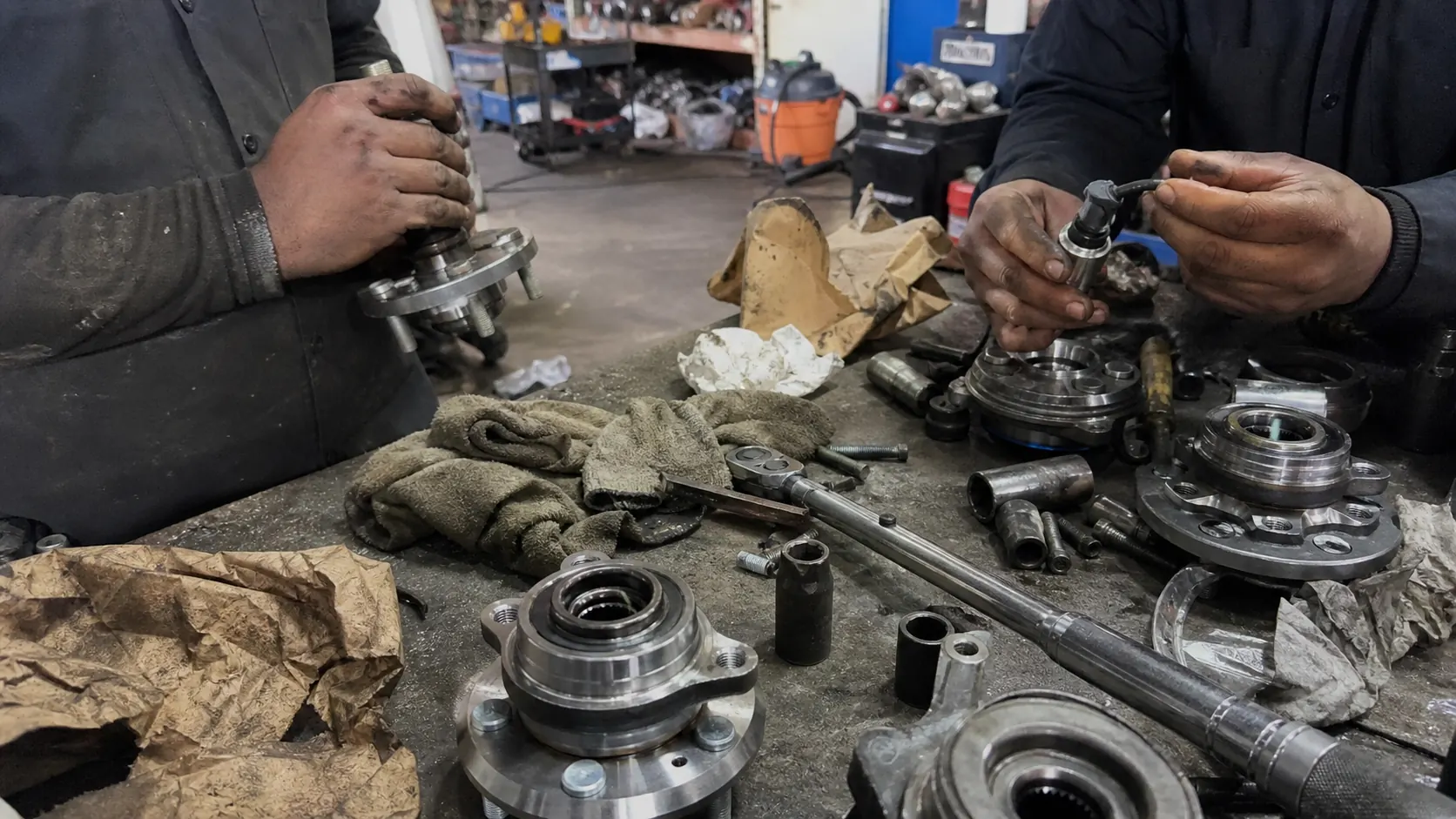
BCA Bearings scheduled its August 5 technical session around wheel bearing and hub diagnostics, ABS and wheel speed sensor troubleshooting, difficult hub removal, installation practice and live axle service. That list is useful beyond the service bay. It shows where a short wheel hub RFQ can fail.
A buyer may ask for a “front wheel bearing” and expect one answer. The supplier may need to distinguish a press-in bearing, a hub unit, a driven assembly, a non-driven assembly, an integrated sensor and position-specific hardware. Start with the architecture.
Wheel hub assembly sourcing begins with the correct generation
NTN describes several wheel-end designs. Gen 1 uses a compact double-row bearing arrangement. Gen 2 adds mounting functions to the bearing structure. Gen 2.5 is designed for inner-ring rotation with a hub spindle, while Gen 3 integrates mounting flanges and may also include a driven spline.
These labels describe construction, not a universal interchange rule. A quotation should follow the vehicle application and supplier catalog rather than selecting a generation by appearance. Capture whether the request is for a loose bearing, a hub-and-bearing unit or a complete flanged assembly.
The driven status also matters. Record front-, rear- or all-wheel drive and the requested axle position. If the old unit is available, ask for photographs of the mounting face, bore or spline, connector and original marking. Those images can help resolve a catalog question, but the supplier should still return the exact application record tied to the quoted reference.
ABS wheel speed sensor compatibility is a fitment field
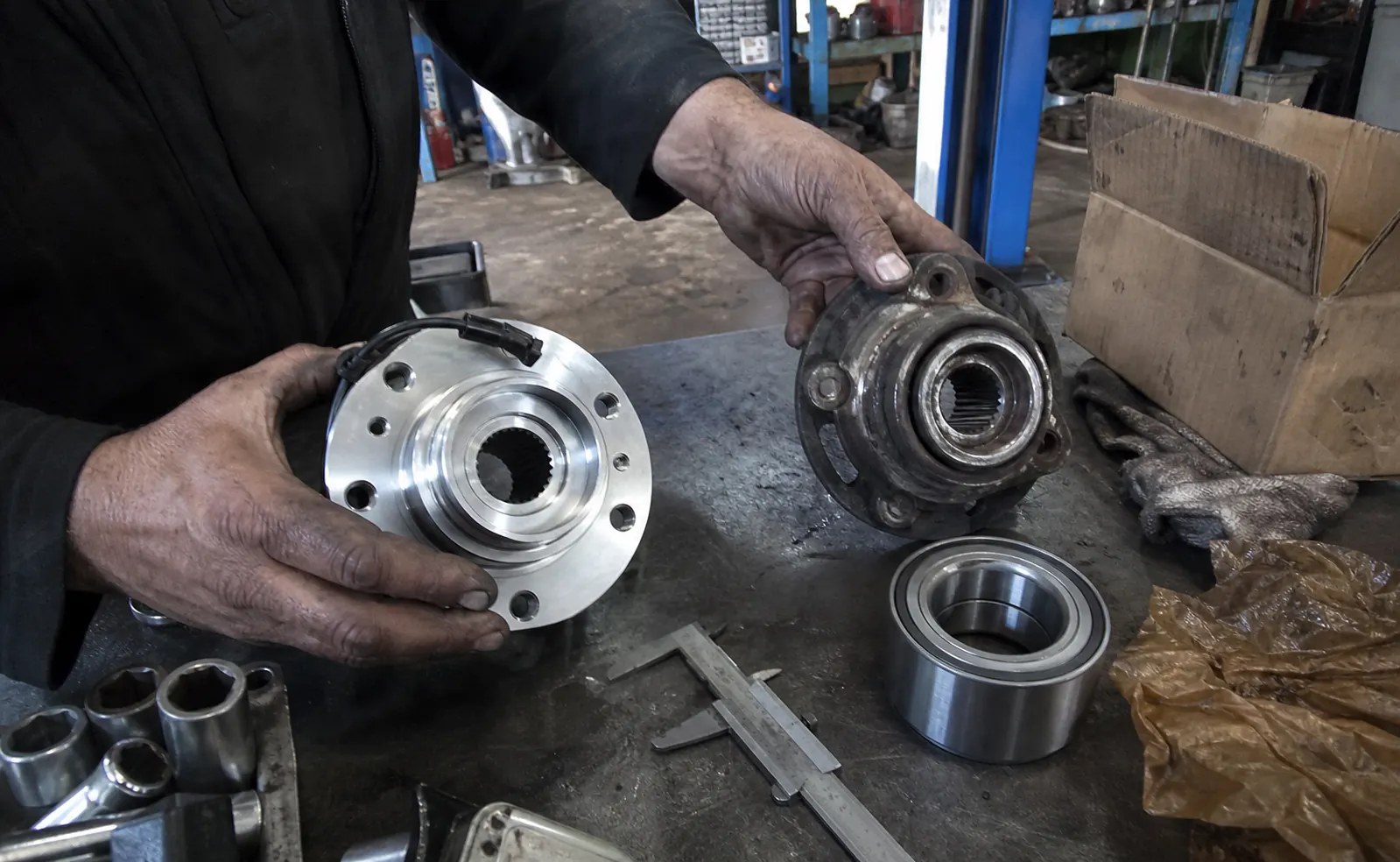
Many modern hub assemblies incorporate a wheel speed sensor, encoder ring or sensor harness. BCA's technical material notes that the encoder can be built into the inboard seal and may not look like a separate tone ring. A product image alone may therefore be incomplete evidence.
Ask the supplier to confirm:
- Whether the hub contains an encoder ring or integrated sensor
- Whether a harness and connector are included
- Connector shape, cable routing and mounting points
- Any production-date, chassis or brake-system split in the application
- Whether additional hardware is supplied with the assembly
Do not reuse a sensor or infer compatibility to avoid checking a connector. BCA explains that the sensor-to-encoder air gap can be set as part of the manufactured hub unit. Changing the sensor arrangement can produce an incorrect signal even when the assembly bolts into place.
This is why “it fits the knuckle” is not a complete fitment test. A mechanical near-match can still create an ABS warning or unstable wheel-speed data.
Installation requirements belong in the sourcing record
BCA's Gen 3 installation guidance warns against using an impact wrench during installation and calls for a torque wrench with the vehicle manufacturer's specified values. It also states that axle-nut torque affects bearing preload and that an incorrect value can lead to premature failure.
A parts supplier does not set the repair procedure for every vehicle, but the purchasing record should preserve the information needed by the installer. Ask whether the package includes a new axle nut or other one-time-use hardware. Request the technical sheet or catalog note attached to the reference. Keep the vehicle manufacturer's service information as the final authority for torque and procedure.
Shortcuts create noisy warranty discussions. If the order record identifies the exact application, included hardware and technical-document revision, the buyer and supplier have a clearer basis for reviewing a return.
Receiving inspection can catch damage before installation
BCA recommends visually inspecting a new bearing or hub unit, checking wheel-speed sensor wiring and connectors, and rotating the bearing by hand before installation. The company also notes that a new unit can initially feel resistant or slightly gritty because of tight tolerances, grease and seals. That feeling alone is not proof of a defective bearing.
At receiving, check for shipping damage, bent or pinched wiring, cracked connectors, damaged threads, missing studs or hardware and corrosion caused by wet packaging. Photograph any exception before the part moves to the workshop. Do not disassemble a sealed unit for inspection.
If rotational feel is questioned, compare it with the supplier's technical guidance rather than rejecting it from a casual hand-spin test. Record the part number and batch information visible on the package so the supplier can answer against the correct item.
Difficult removal changes the job, not the replacement fitment
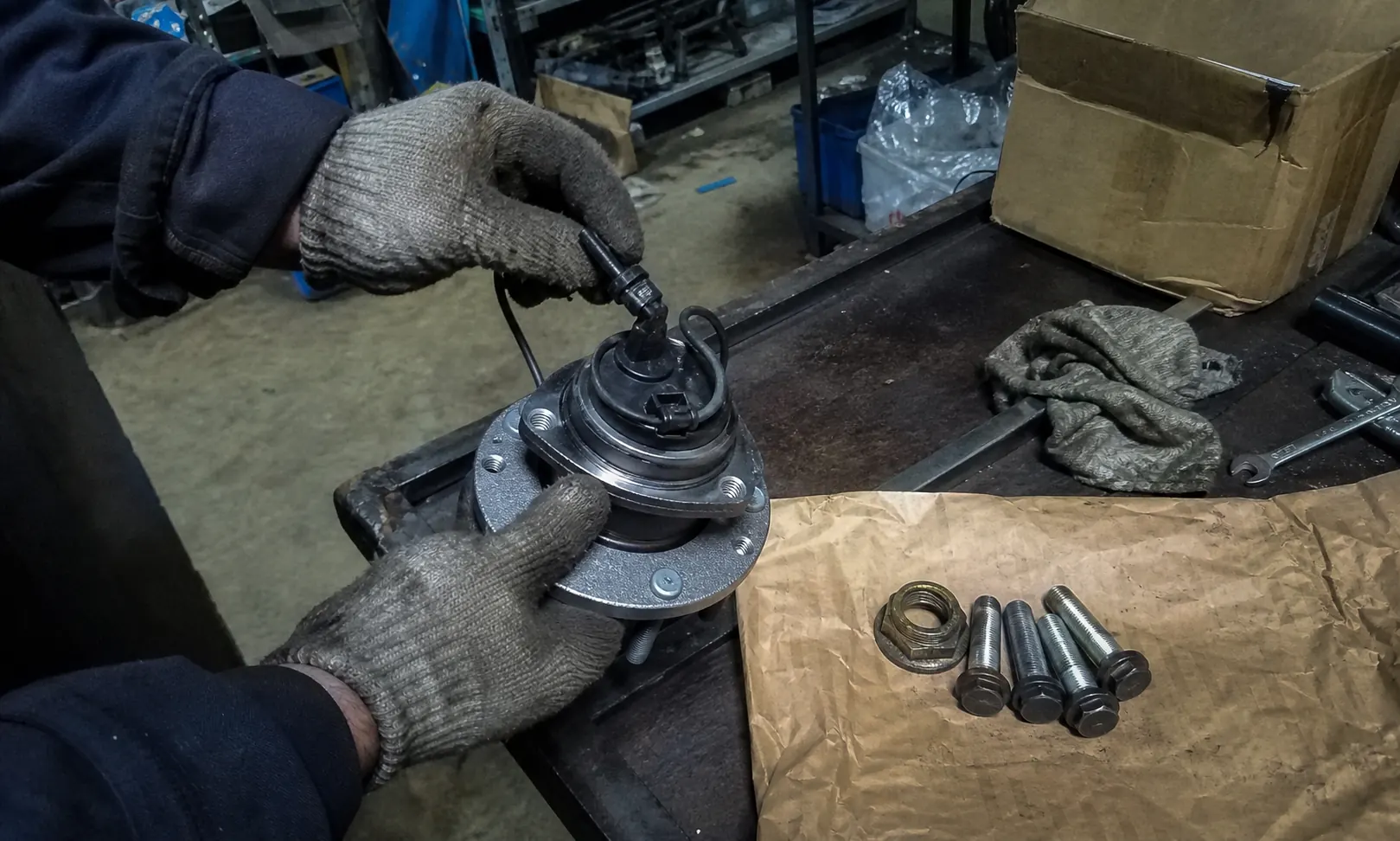
BCA identifies galvanic corrosion between a steel hub and an aluminum steering knuckle as one reason a hub can become difficult to remove. Its guidance cautions that uncontrolled force can damage the knuckle or nearby steering and suspension components.
This service condition should not push the buyer toward a different-looking hub. Instead, it may change the tools, supporting parts and inspection work required for the job. If the knuckle, fasteners, backing plate or sensor wiring is damaged during removal, those become separate line items with their own fitment checks.
Live axle bearings also belong in a separate branch. A solid axle request can involve bearings, seals, repair bearings or other axle-service parts. Ask whether the vehicle uses a floating or semi-floating design and require the supplier's application lookup. Do not convert a live-axle service request into a Gen 3 hub quotation.
Build the wheel hub RFQ around six checks
- Vehicle make, model, year and production or chassis qualifier
- Front or rear axle and left or right position when cataloged
- Front-, rear- or all-wheel-drive configuration
- Loose bearing, hub unit or complete flanged assembly
- ABS encoder, integrated sensor, harness and connector configuration
- Included axle nut, studs, seals or other installation hardware
Add the requested quantity, delivery destination and old part marking after fitment fields are complete. If a supplier reference is already known, include it, but do not strip away the vehicle information. A mistyped reference is easier to catch when both records are present.
NodeMotive takeaway
For an aftermarket wheel hub assembly supplier request, send the application, axle position, drive configuration, sensor details, old marking and required hardware together. The cheapest comeback is the one prevented before the part is quoted.